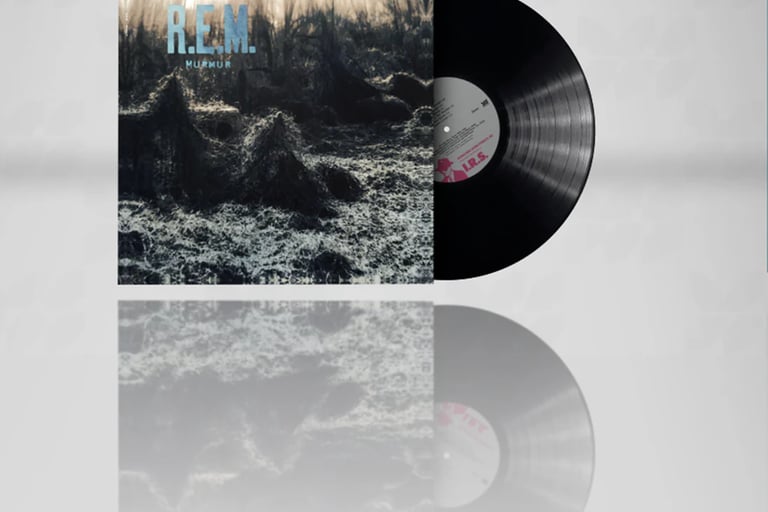
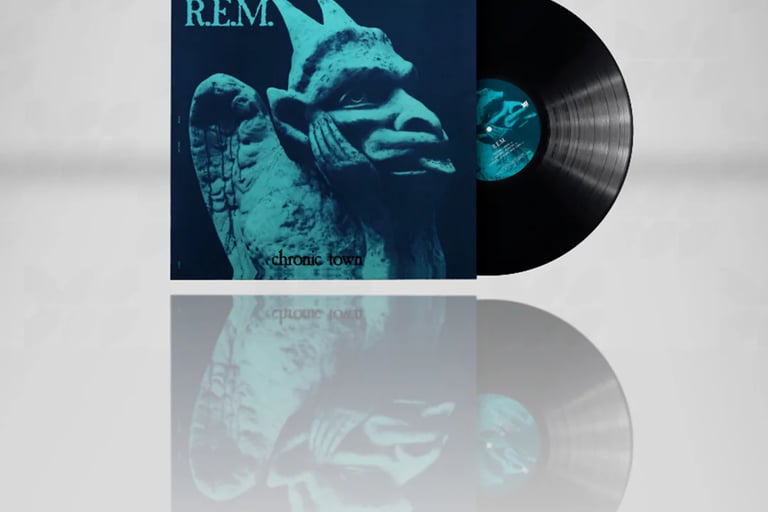
Deluxe DSS One-Step 2×LP set – R.E.M. Murmur / Chronic Town
R.E.M.’s Murmur and Chronic Town finally get the premium treatment in this all-analog DSS One-Step, and the results are anything but generic audiophile gloss. In this review I compare the new set directly to early IRS originals and the long-out-of-print MoFi, explain why the original IRS Murmur remains the emotional reference, and why Chronic Town is the real revelation that makes this package highly recommended.
12/15/20259 min read
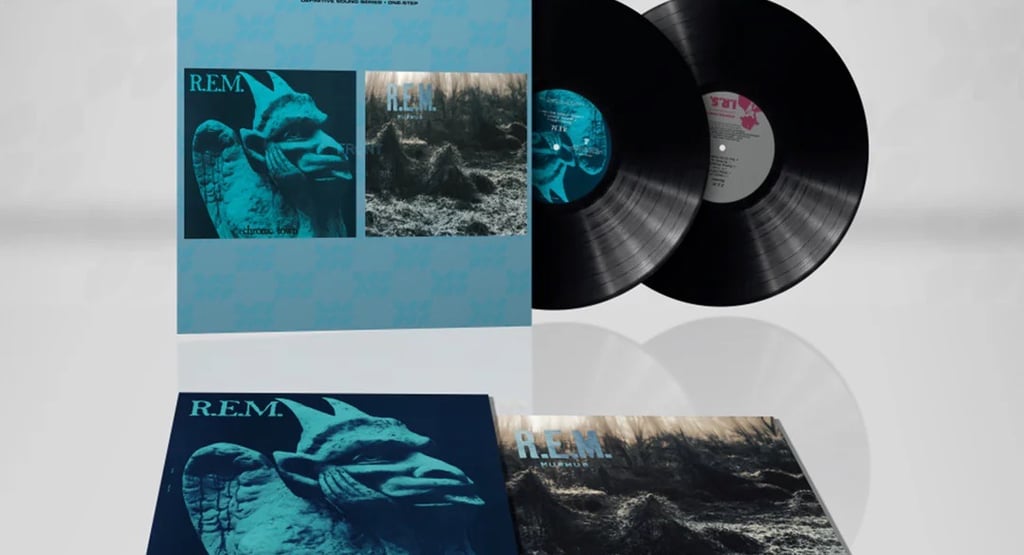
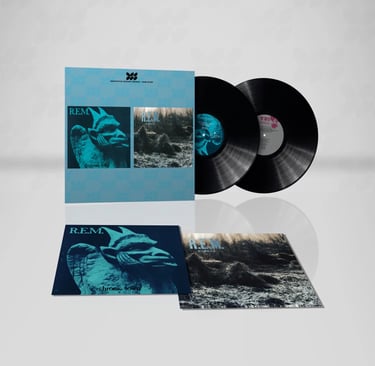
Label: Definitive Sound Series (DSS)
One-Step 2LP set – Murmur (album) + Chronic Town (EP)
Source: All-analog chain from the original master tapes
Mastering: Chris Bellman
Plating: One-step process
Vinyl: Neotech VR900-D2 “super vinyl” formulation, 180g
Packaging: Stoughton tip-on jackets for each title, housed in an outer slipcase; individual numbering and certificate of authenticity
Clean early IRS pressings of Murmur and Chronic Town have never been cheap, and they certainly aren’t getting any easier to find. This new One-Step set doesn’t replace those originals, but it does something more interesting: it reframes the way this era of R.E.M. can sound at home—sometimes for the better, occasionally as a compelling alternate, and once in a while in ways that may divide long-time listeners.
You come for Murmur, but you stay for Chronic Town.
Athens, an abandoned church, and the sound of early R.E.M.
Before any deluxe box or numbered slipcase, this music belonged to four college kids in Athens, Georgia—playing small rooms and in an abandoned church as part of a local underground that cared more about texture and feel than studio gloss.
Chronic Town was cut at producer Mitch Easter’s Drive-In Studio, a modest garage space in North Carolina. Murmur followed at Reflection Studios in Charlotte: still a young band, still chasing a sound that was hazy, jangly, and deliberately a little mysterious.
That origin story matters, because the best early R.E.M. records aren’t about sub-bass and hi-fi fireworks. They live or die in the midrange: in the way Michael Stipe’s voice sits in the fog, in the way Peter Buck’s Rickenbacker chimes, and in the way Mike Mills’ bass lines sometimes speak through drones rather than sheer low-frequency weight.
Murmur
– early IRS vinyl vs. DSS One-Step
Early IRS pressings: the emotional reference
Early IRS pressings of Murmur are already something special. Stipe’s vocal sits in a gentle fog but stays focused, Buck’s Rickenbackers shimmer above him, and Mills’ bass lines live in that crucial midrange band where notes can swell with drone-like ambiguity. The kick and snare step sit back a bit, in contrast to later-day sub-bass-heavy voicing.
On a good copy, Side One—“Radio Free Europe,” “Pilgrimage,” “Laughing,” “Talk About the Passion,” and “Perfect Circle”—play like an extended mood piece. The sound is dense and a little grainy in spots, but in the best way: everything arrives as one cohesive, midrange-driven wash rather than a collection of carefully separated stems.
“Perfect Circle” is a perfect example. On a good IRS original, the piano, the guitar arpeggios, the vocal, the cymbal swell near the end—they don’t call attention to themselves individually. You just sit there and suddenly realize you have chills. The record pulls you in as an album, not as a series of audiophile “moments.”
There are tradeoffs. Original copies, even in visually strong condition, can carry low-level surface noise, and the bottom octaves of the bass are more implied than explicit. But in terms of emotional impact and era-appropriate tonality, these early IRS pressings still feel like the reference.
Murmur DSS One-Step: a cleaner, more dynamic alternate
The new DSS One-Step uses those same analog tapes to offer a cleaner alternate perspective. On Murmur, Stipe’s voice becomes more defined and slightly more forward in the mix, while the rhythm section gains real weight. The Neotech VR900-D2 surfaces are so quiet that notes hang in black space—most noticeably the piano chord at the end of “Laughing,” which lingers long after you’re used to hearing it vanish on standard vinyl.
The overall presentation edges closer to what many listeners imagine a master tape sounds like: less haze, more clarity, and a stronger sense of separation between instruments. You can turn this cut up really loud without anything breaking up. In that sense it behaves similarly to the best modern One-Steps—it rewards volume.
Where this pays real dividends is on the more driving material on Side Two of Murmur. “Catapult” gains a more present vocal and a drum kit that feels less buried. “9-9” benefits from tighter, more articulate bass and a snare/kick combination that propels the song forward in a way that’s genuinely exciting. The closer, “West of the Fields,” is where this mastering approach really comes together: the extra drive and dynamic punch turn it into one of the standout demo-style moments of the entire set.
There are some tradeoffs. Compared to an early IRS original, the One-Step feels a little drier and slightly more restrained in the upper midrange, especially on Side One. On “Perfect Circle,” the cleaned-up vocal, better-defined bass, and beautiful piano weight in the right channel are all easy to admire—but the cumulative effect is more analytical. You hear the components of the performance more clearly, but the emotional “glow” that the midrange haze provides on the original is reduced. The song is still moving; it just doesn’t quite wrap around you in the same way.
On Side Two, the balance shifts. Faster tracks like “9-9” and “West of the Fields” are dynamic enough that the extra headroom, quieter vinyl, and firmer low end feel like genuine improvements rather than trade-offs. “Shaking Through,” by contrast, remains a midrange-centric piece whose emotional power still favors the original, even if the One-Step gives the piano more weight and isolates individual details more cleanly.
The net result is that the DSS One-Step Murmur is a highly credible alternate view of a great record—cleaner, more dynamic, and easier to play loud—without dethroning the early IRS LP as the emotional benchmark.
Chronic Town
– where the One-Step truly shines
If Murmur is the reason this set exists, Chronic Town is the reason many listeners will keep it.
Side One of Chronic Town on the One-Step is one of the most exciting home listening experiences I’ve had with early R.E.M. on vinyl. “Wolves, Lower,” “Gardening at Night,” and “Carnival of Sorts (Boxcars)” aren’t particularly murky recordings to begin with; they’re lean, energetic, and more overtly “band in a room” than much of Murmur. That turns out to be the perfect playground for this One-Step / Neotech combination.
On the DSS cut, “Wolves, Lower” doesn’t just get you closer to the master tape—it feels like a small studio performance happening right in front of you. The drum kit sits dead center, with clearly differentiated toms, snare, and kick; guitars and vocals wrap around it in a wide, immersive soundstage. Dynamics are explosive but controlled, and the midrange stays intact. It’s vivid and propulsive without tilting into hyper-clinical territory.
“Gardening at Night” and “Carnival of Sorts” follow suit. The extra clarity lets you hear interlocking guitar parts and backing vocal flourishes that can blur together on lesser pressings, while the Neotech surfaces keep the noise floor essentially nonexistent. On “Carnival of Sorts,” the combination of punchy drums, articulate bass, and atmospheric detail is particularly satisfying—it feels like you’re listening in on the band at Drive-In Studio rather than playing a copy of a copy of the record.
Side Two (1,000,000 and “Stumble”) continues the trend. Compared to the early IRS EP with its slightly brighter, more obviously “record-like” presentation, the One-Step trades a bit of that edgy, punk-adjacent vocal grain for tighter bass, more stable imaging, and a sense that the performance is anchored in a real acoustic space. “Stumble,” with its half-chaotic, half-orchestrated tom fills and vocal asides, benefits especially from the added separation and dynamic range; the climactic section opens up in a way that’s both exciting and surprisingly refined.
To be clear: original pressings of Chronic Town still sound very good, and “Carnival of Sorts” in particular remains particularly exciting on a hot early IRS copy. But taken as a whole, the DSS One-Step EP feels like a genuine step forward—less about nostalgia and more about letting you hear how powerful and alive this material can sound when the tape, plating, and vinyl noise floor aren’t holding anything back.
Mobile Fidelity’s
Murmur
– now just a curiosity
Mobile Fidelity’s 1990s 200g edition of Murmur has long held a certain cachet in collector circles, largely because nothing else “audiophile” existed for the album. In the context of this new release, it becomes much easier to see it for what it is: a well-intentioned but flawed attempt to modernize the sound.
Compared directly, the MoFi cut largely preserves the midrange balance of the original but heaps extra bass energy on top without a corresponding increase in articulation. The result is more boom than clarity. On tracks like “Radio Free Europe” and “Talk About the Passion,” the already dense low-end and lower-mid information becomes thicker and more opaque, obscuring some of the very inner detail that makes the IRS LP special.
Upper mids and highs are also slightly tamed compared to the original, which means Buck’s Rickenbacker doesn’t chime with quite the same authority, and certain high-hat or cymbal details pop out in a way that feels disconnected from the rest of the kit rather than organically integrated.
Side Two fares no better. The same bass boost that should, in theory, make tracks like “9-9” and “West of the Fields” hit harder instead blurs the rhythm section and undermines the propulsion that the DSS One-Step delivers so convincingly. Once you’ve spent time with an early IRS pressing and the new One-Step, the MoFi pressing starts to feel like a murky middle ground with little to recommend it beyond rarity.
For serious listening today, Mobile Fidelity’s Murmur is essentially a curiosity—interesting to hear once, but not a version that improves on what’s now available.
Value, noise floor, and who this DSS One-Step is for
From a purely physical and technical standpoint, this is a beautifully executed set. Both LPs arrived flat, on-center, and functionally silent. The Neotech compound behaves as advertised: long note decay, jet-black backgrounds, and that uncanny sense that songs emerge from and then disappear back into silence rather than vinyl noise. The jackets are high-quality tip-on reproductions, and the outer slipcase and certificate give the whole package a genuinely premium feel without veering into gimmick territory.
In today’s market, early IRS copies of Murmur and Chronic Town in truly clean, quiet condition are not bargain-bin items. It’s not unusual to see a nice Chronic Town hovering around the price of a mid-tier audiophile reissue, with Murmur often equal or higher. For listeners who don’t already own good originals, this set instantly becomes one of the most practical ways to acquire both titles in top-tier condition and sound.
For those who do own early IRS pressings, the calculus is more nuanced:
If Murmur is one of your core records and you already have a strong, relatively quiet original, the One-Step LP is best viewed as an alternate perspective—cleaner and more dynamic, especially on Side Two, but not emotionally superior to the original.
If Chronic Town is important to you (and it should be), the One-Step EP is compelling enough on its own to justify serious consideration. It doesn’t erase the value of the original, but it offers a level of immediacy, drive, and “you are there” realism that’s hard to ignore once you’ve heard it.
Taken together, the package succeeds in the way the best modern reissues do: it doesn’t try to rewrite history so much as give you another lens on music you already know, with just enough technical improvement to feel worthwhile.
Verdict
This isn’t a case where the reissue simply crushes the originals and makes the buying decision easy. Early IRS vinyl of Murmur and Chronic Town still matters It still feels like the reference for how this era of R.E.M. was first experienced.
What this DSS / Because Sound Matters One-Step does, at its best, is sit alongside those pressings as a complementary path:
Murmur as a cleaner, more dynamic, master-tape-leaning alternate that particularly elevates Side Two.
Chronic Town as a borderline revelatory re-presentation of the EP, turning Side One in particular into a small-studio performance that feels almost shockingly alive on a modern system.
If you care about this era of R.E.M. and don’t have clean early IRS originals of both titles, this One-Step set is an easy recommendation. And even if you do own them—and these records sit at the center of your collection—the combination of silent vinyl, thoughtful mastering, and an outstanding Chronic Town may still make it a fantastic alternate listen worth owning.
Rating: Highly Recommended.